Balancing tourism distribution
When we love a destination to death, i.e. when too many tourists flock to a destination exceeding its ability to manage them sustainably, resulting in overcrowding, environmental degradation, strained infrastructure and a reduced quality of life for residents, everyone screams “overtourism’”. Accusing tourism of being the culprit, what follows are strident calls for some form of restriction.
Yes, the tipping point, where the impact of tourism outweighs its benefits is cause for serious concern. Not only that, when there are too many tourists, the quality of the visitor experience can be significantly degraded.
The problem isn’t that there are too many tourists. The problem is that they’re all in the same place at the same time.
I recall visiting the Vatican Museums with my wife some years ago. What sticks to our minds is that the visitor experience was significantly eroded by turning quiet art appreciation into slow-moving, congested bottlenecks. The immense crowds and vast scale turned what should be a magical visit into an exhausting and negative ordeal. Everyone is squeezed through the opulent halls in one vast, sluggish- moving, sweaty mass of humanity…like hot toothpaste slowly moving through a tube.
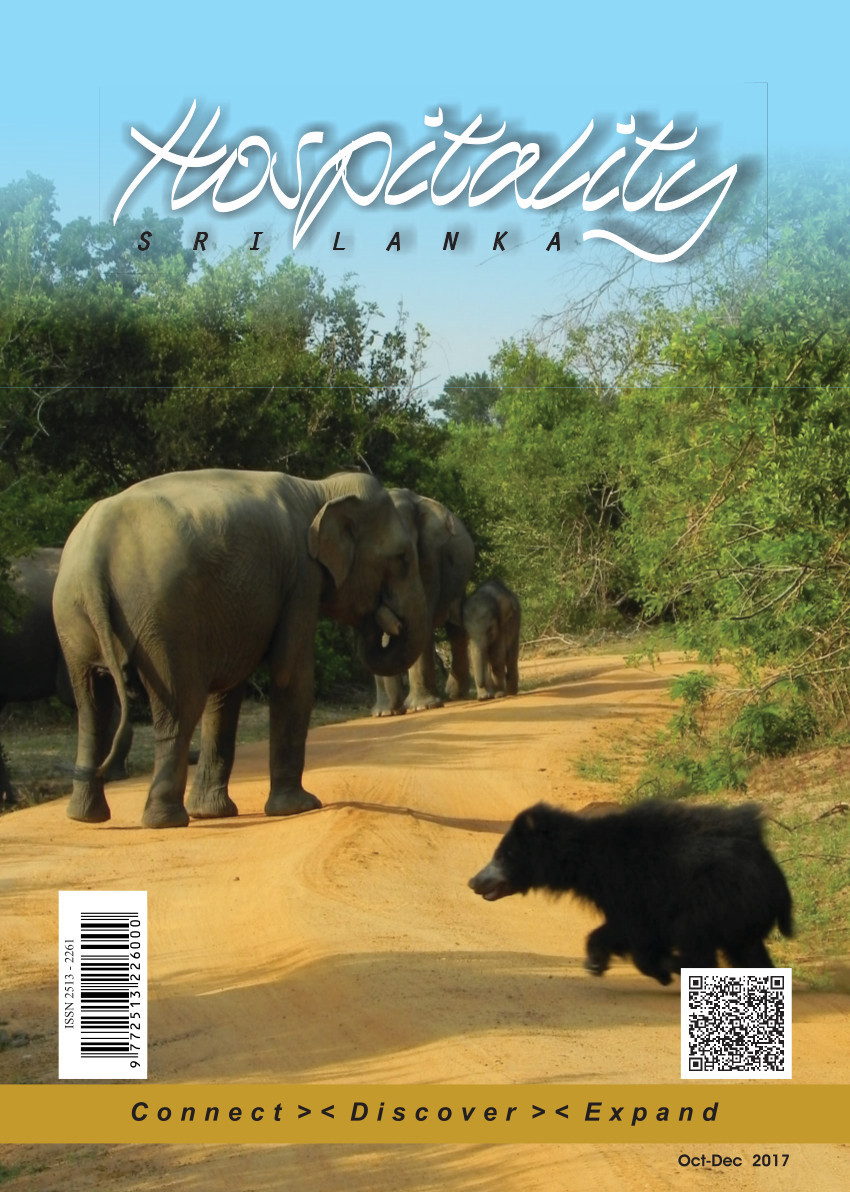
Take Sri Lanka’s Yala Wildlife National Park. The question most park staff should be trying to answer is how to handle these tremendous crowds while protecting not only natural resources, but the visitor experience. Impacts from these crowds are many: Long lines at park gates, road shoulders turning into parking areas with vehicles running over vegetation, trail erosion becoming extensive, social trails zigzagging away from official trails, restrooms dirty more than they are clean, wastewater systems overtaxed, litter and so on…
There are five blocks in Yala National Park, and Block 1 has the highest density of leopards. That is not to say the chances of spotting leopards are non-existent in other blocks, as these big cats roam freely. The primary two gateways to the Yala National Park are the Palatapuna (Main) gate in the South providing direct access to Block 1 and the Katagamuwa gate, which grants access to Blocks 1 and 4, at the northern side. The two gates are located on opposite ends of the park's popular Block 1 (approximately 40 kms / 40 minutes driving time between each other).
Because the majority of hotels including those with large room inventories are located in the Southern side, all and sundry want to enter block one through the Palatapuna gate preferring to arrive between 4:45am and 5:15am, waiting roughly 45 to 75 minutes in their vehicles for the gates to open at 6:00am, and then spend another 15 to 30 minutes for ticket and permit processing. Contrary to this, one can drive through the Katagamuwa gate, in much less time, with far less congestion.
What it signals is the need for some strategic planning and proactive management; rather than some version of restriction. What if we reframe the presence of vast crowds not as a problem of overtourism, but of congestion? Most “overtourism” is a congestion problem; visitors arriving in the same few months to the same attractions at roughly the same time. What is called for is re-distribution, not restriction.
What if we focused solutions on distribution demand better? What if a two-tier structured entry fee is levied to enter the park in Yala? For example, would a higher rate for those wishing to enter through the main gateway in the south, and a lesser entry fee at the gate in the north may entice many to enter the park via the latter gate? What if we can make it much more attractive to visit in the off season, and to travel to different routes, etc?
Let’s make the conversation about balancing the distribution, not blaming the people who are going out of their way to see our hot spots.
Shafeek Wahab - Editor, Hospitality Sri Lanka, Consultant, Trainer, Motivational Speaker, Mystery Guest Auditor, Ex-Hotelier
|
|
|
|